
GRILLED GLAZED SALMON FILETS
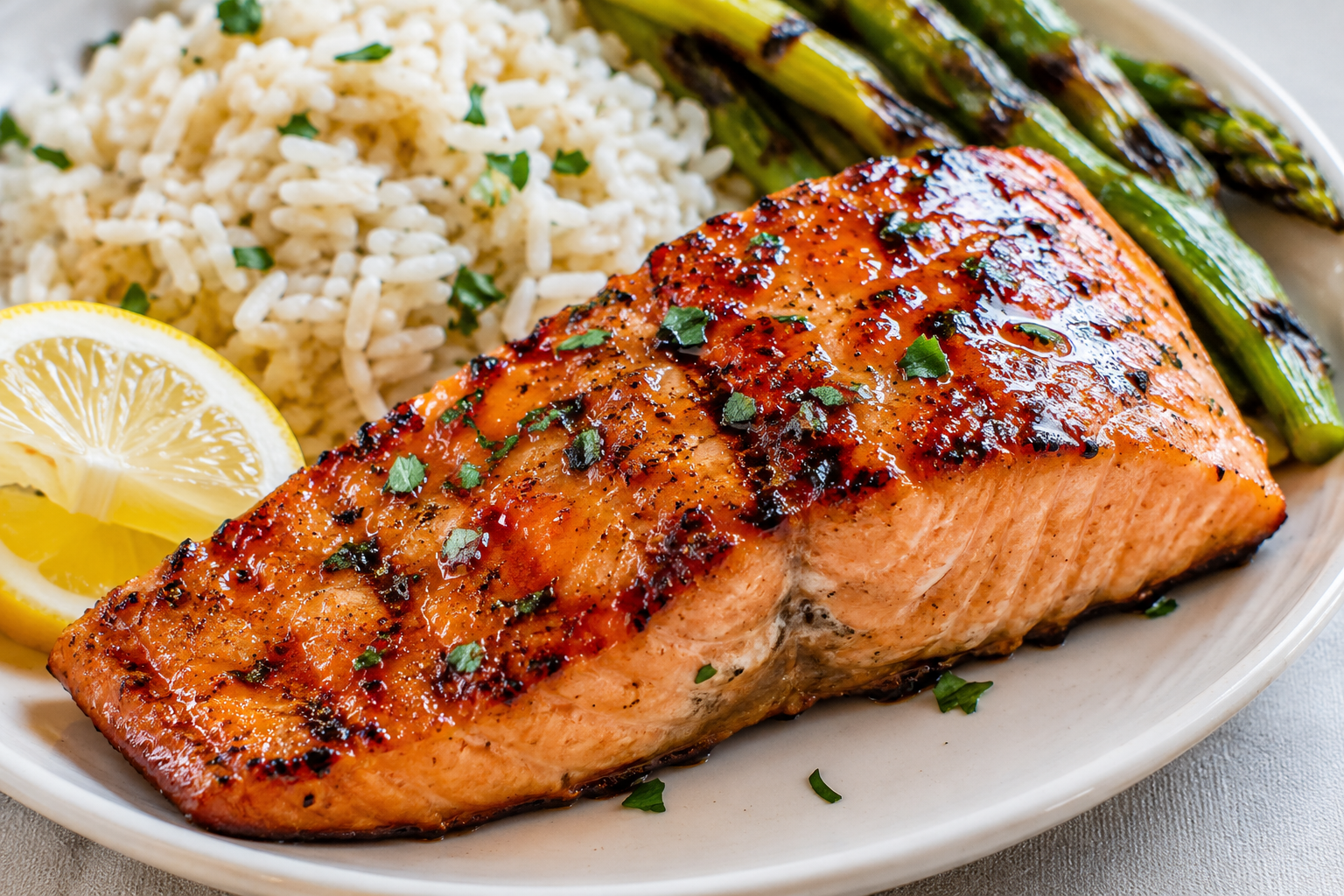
Grilled glazed salmon filets are tender, smoky salmon brushed with a rich sweet-and-savory glaze. It is one of those dishes that feels elegant enough for a special occasion yet simple enough for a weeknight dinner. Grilling adds a subtle char and depth of flavor. It pairs beautifully with the natural richness of salmon. The glaze caramelizes as the fish cooks, creating a glossy coating. It balances sweetness, acidity, and umami. Served with grilled vegetables, rice pilaf, roasted potatoes, or a fresh summer salad, this dish delivers restaurant-quality flavor with minimal effort.
The Key To Great Grilled Salmon
One of the keys to great grilled salmon is avoiding overcooking. Salmon should remain moist and flaky in the center, with an internal temperature of about 125–130°F for medium or 145°F if you prefer it fully cooked. The glaze in this recipe combines honey, soy sauce, Dijon mustard, garlic, and fresh lemon juice. As it cooks, the sugars in the honey create a beautiful, caramelized exterior. The mustard and lemon provide brightness that cuts through the richness of the fish.
This recipe works well with both Atlantic and wild-caught salmon. If using skin-on filets, grilling them skin-side down for most of the cooking time helps protect the delicate flesh and makes handling easier. The finished salmon has a slightly crisp exterior, a juicy center, and layers of flavor in every bite.
GRILLED GLAZED SALMON FILETS: ORIGINS
Grilled glazed salmon does not have a single, specific origin. Instead, it is a modern dish that combines culinary traditions from several cultures known for preparing salmon and using sweet-savory glazes.
Salmon has been a staple food for Indigenous peoples of the Pacific Northwest in North America for thousands of years. Traditional methods often involved roasting, smoking, or grilling freshly caught salmon over open flames.
The glaze commonly used on grilled salmon today is heavily influenced by Asian cuisine, particularly Japanese cooking. Ingredients such as soy sauce, honey, garlic, and citrus are similar to the flavors found in teriyaki-style preparations. Teriyaki originated in Japan, where fish and meats were brushed with a sweet soy-based glaze during cooking.
Modern grilled glazed salmon became especially popular in North America during the late 20th century as chefs began blending Pacific Northwest seafood traditions with Asian-inspired flavors. This fusion approach highlighted the rich flavor of salmon while adding the sweet, savory, and tangy notes that have become characteristic of the dish.
Today, grilled glazed salmon is widely enjoyed in restaurants and homes around the world and is often associated with contemporary American, Pacific Northwest, and Asian-fusion cuisine rather than any single culinary tradition. It remains popular because it combines healthy, nutrient-rich salmon with bold flavors and simple preparation methods.

GRILLED GLAZED SALMON FILETS
Ingredients
Equipment
Method
- In a small bowl, whisk together the honey, soy sauce, Dijon mustard, garlic, lemon juice, lemon zest, smoked paprika, and red pepper flakes until smooth.
- Pat the salmon filets dry with paper towels. Brush lightly with olive oil and season with salt and pepper.
- Heat the grill to medium-high heat, approximately 375–400°F. Clean and oil the grates to prevent sticking.
- Place the salmon skin-side down on the grill. Cook for 4–5 minutes. Brush generously with the glaze.
- Carefully flip the salmon and grill for another 2–4 minutes, brushing with additional glaze every minute. Cook until the fish flakes easily with a fork and the glaze has caramelized.
- Remove the salmon from the grill and let it rest for 2–3 minutes. Garnish with chopped parsley and serve with lemon wedges.
Notes
- Grilled asparagus or zucchini
- Garlic mashed potatoes
- Wild rice or jasmine rice
- Cucumber and tomato salad
- Roasted Brussels sprouts