
FLAMING GREEK SAGANAKI-A TIMELESS TAVERNA CLASSIC
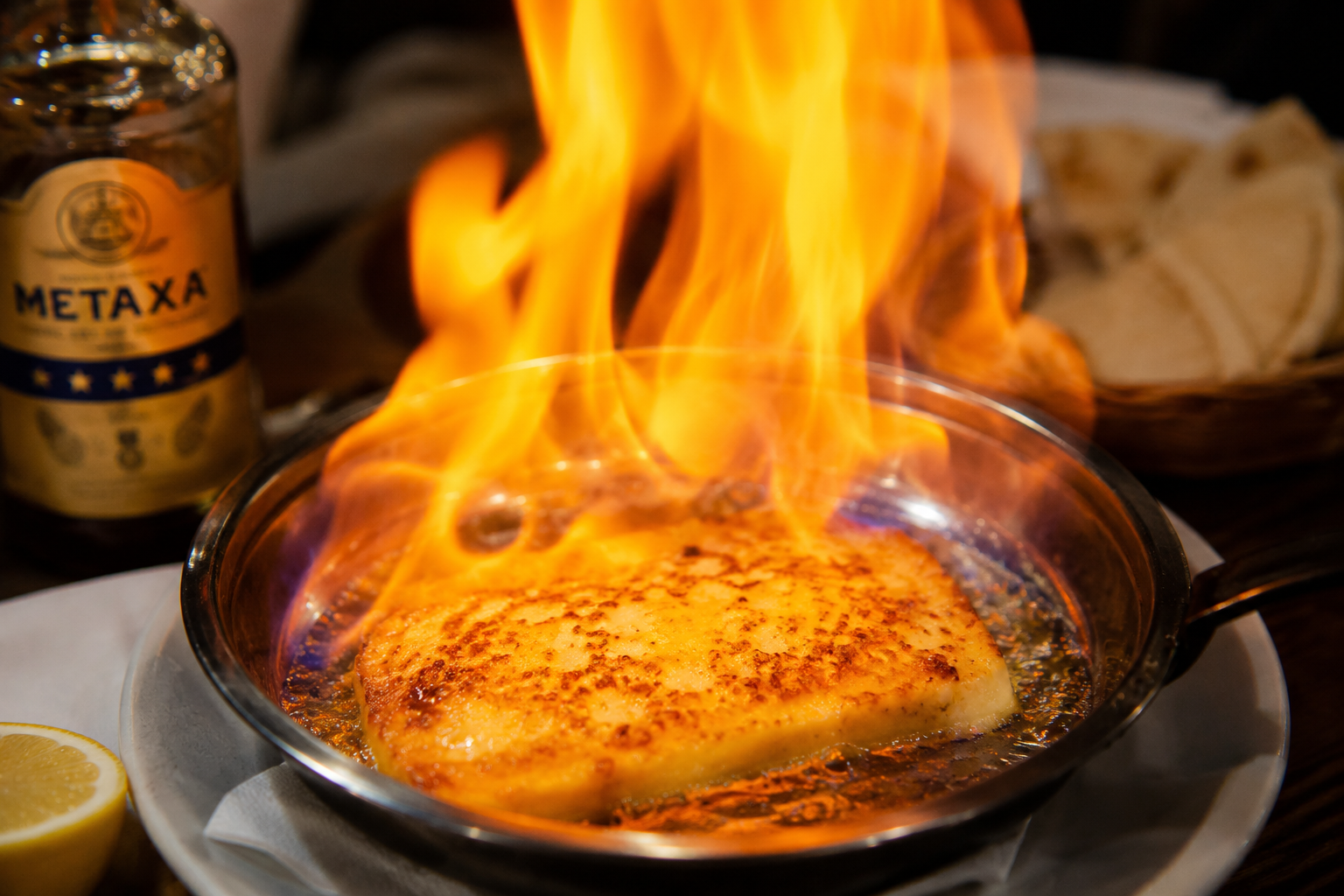
Flaming Greek Saganaki-A timeless taverna classic is also a showstopper. Few dishes capture the excitement and warmth of Greek hospitality quite like flaming saganaki. Served sizzling hot with its signature golden crust. It is often accompanied by a dramatic burst of flames and the celebratory cry of “Opa!.” this beloved appetizer has become one of the most recognizable symbols of Greek cuisine around the world. While the theatrical tableside presentation is unforgettable, the true star of the dish is its simplicity. A perfectly pan-fried slice of cheese finished with a squeeze of fresh lemon that highlights its rich, savory flavor.
Flaming Greek Saganaki-A timeless taverna classic History
The name saganaki comes from the Greek word sagani. It refers to the small, two-handled frying pan traditionally used to prepare the dish. In Greece, the term “saganaki” actually describes the cooking vessel rather than the ingredients themselves. Over time, however, the name became synonymous with the famous fried cheese appetizer enjoyed in tavernas and restaurants throughout the country.
Traditional Saganaki
Traditional saganaki is typically made with firm Greek cheeses such as Kefalotyri, Kasseri, or Graviera. These cheeses are ideal because they soften beautifully when heated while maintaining their shape. After being lightly dusted with flour, the cheese is pan-fried in olive oil until the exterior becomes irresistibly crisp and golden. The inside turns warm, creamy, and deliciously melty. A generous squeeze of fresh lemon juice cuts through the richness and provides the perfect finishing touch.
Although saganaki has been enjoyed in Greece for generations, the dramatic flaming version most people recognize today became especially popular in North America. During the mid-20th century, particularly in Greek restaurants in cities such as Chicago. Restaurant owners began adding a splash of Greek brandy, most commonly Metaxa, or cognac before igniting the cheese tableside. This creates an entertaining dining experience that quickly became a customer favorite. The famous exclamation “Opa!” soon became inseparable from the dish, adding an atmosphere of celebration to every serving.
Despite its worldwide popularity, authentic Greek saganaki remains wonderfully uncomplicated. It relies on a handful of quality ingredients rather than elaborate techniques. Good cheese, extra virgin olive oil, fresh lemon, and careful cooking are all that’s needed to create a dish that has stood the test of time.
Today, flaming saganaki continues to be a staple in Greek tavernas, family celebrations, and home kitchens alike. Whether served as the first course of a festive Mediterranean meal or enjoyed as a shared appetizer with warm pita bread, olives, and a glass of wine, it embodies the Greek philosophy of bringing people together over simple, flavorful food. Crispy, creamy, tangy, and unforgettable, flaming saganaki is more than just an appetizer—it’s a culinary tradition that celebrates family, friendship, and the joy of sharing a meal.
Flaming Greek Saganaki: A Timeless Taverna Classic
Ingredients
Method
- Pat the cheese completely dry with paper towels.
- Place the flour in a shallow dish and lightly coat the cheese on all sides. Shake off any excess flour.
- Heat the olive oil in a heavy skillet over medium-high heat. Fry the cheese for 2–3 minutes until deep golden brown.
- Carefully flip and cook the other side for another 2 minutes. Remove the skillet from the heat.
- Pour 1–2 tablespoons of Metaxa brandy over the hot cheese.

- Using a long lighter or fireplace match, carefully ignite the brandy. Allow the flames to burn for 5–10 seconds. Extinguish the flame naturally or with a generous squeeze of fresh lemon juice.
- Serve carefully as it will be hot.

Notes
- Best cheese: Kefalotyri is the traditional choice. Kasseri offers a creamier texture, while Halloumi is an excellent substitute and easy to find.
- Don’t over-flour the cheese—just a light coating creates the perfect crispy crust.
- Always remove the pan from the burner before adding the brandy.
- Never pour brandy directly from the bottle onto hot cookware or an open flame. Measure it into a small cup first.
What to Serve With
- Warm pita bread
- Crusty artisan bread
- Greek salad
- Kalamata olives
- Roasted red peppers
- Tzatziki
- Grilled lamb or chicken souvlaki