
Apple Cider and Sage Pork Loin
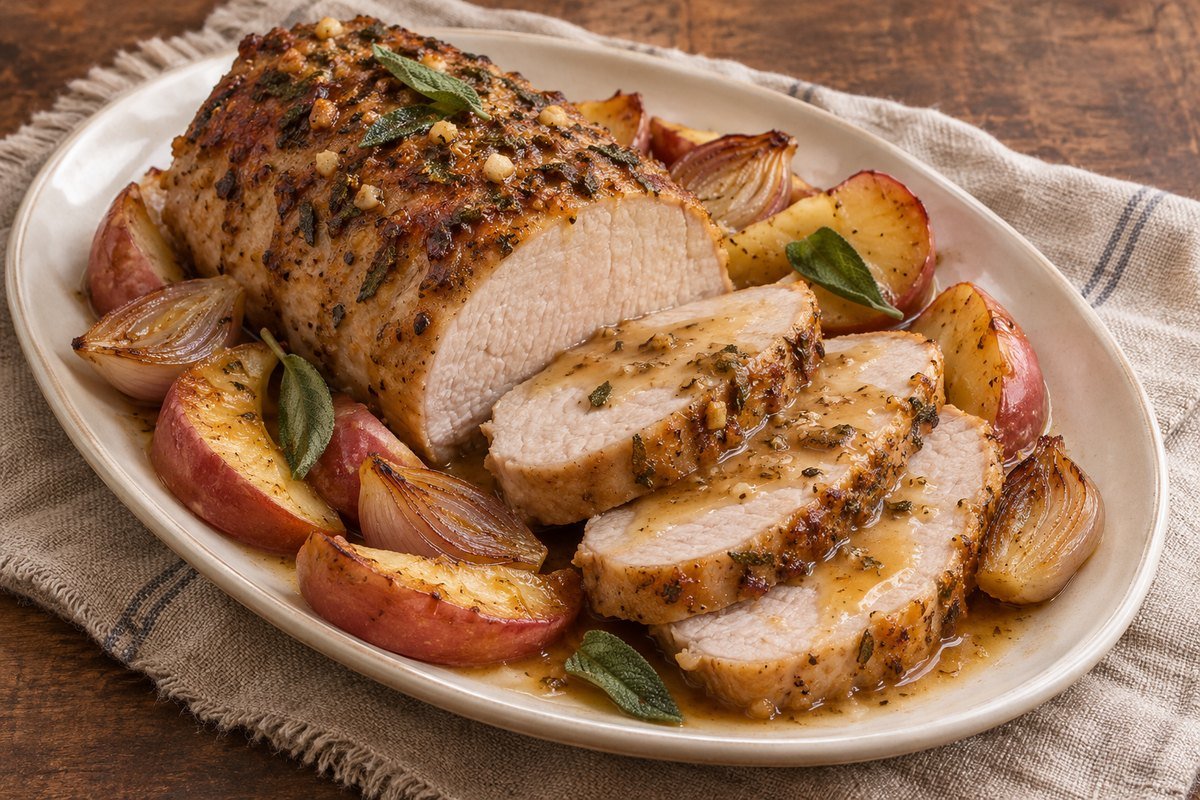
Apple Cider and Sage Pork Loin makes a Thanksgiving centerpiece for six to eight when you bring it to the table surrounded by roasted apples and shallots. Garlic and fresh sage season the pork, while apple cider, Dijon mustard, and the browned bits from the skillet become a glossy pan sauce. The sauce has enough tang to balance the sweetness of the apples, and the shallots soften and mellow as they roast.
This holiday roast takes its flavor cues from Normandy, where the tourism office for the Pays d’Auge shares a local recipe that brings together pork tenderloin, apples, shallots, and cider. That recipe simmers the pork and finishes the sauce with cream. Here, a boneless center-cut loin gives you a roast to carve at the table, and fresh sage and a buttery cider reduction suit the Thanksgiving menu. The recipe uses nonalcoholic apple cider, which brings a mellow sweetness to the sauce.
Browning the pork before roasting gives the meat a golden surface and leaves flavorful bits in the skillet. Add the apples partway through roasting so the wedges soften while holding their shape. Choose a firm apple such as Pink Lady or Braeburn, and leave the peel on for color. While the pork rests, set the apples and shallots aside and simmer the cider and broth in the skillet, scraping the bottom as you go. Whisk in cold butter at the end for a silky finish.
Carve the pork across the grain and spoon a little sauce over the slices. Pass the rest at the table so guests can add more. Roasted green beans and mushrooms with crispy shallots make a savory companion, while wild rice stuffed acorn squash echoes the fruit and sage flavors. Mashed potatoes are another good choice, especially if you have extra cider sauce. Apple cider and sage pork loin is a great alternative to turkey at Thansgiving.

Apple Cider and Sage Pork Loin
Ingredients
Method
- Season and brown the pork. Heat the oven to 350°F. Pat the pork dry and season all over with salt and pepper. Heat 1 tablespoon of oil in a large ovenproof skillet over medium-high heat. Sear the pork on all sides until golden, about 6–8 minutes total. Transfer it to a plate and take the skillet off the heat.
- Add the sage and start roasting. Mix the garlic, sage, 1 teaspoon Dijon, and 1 teaspoon olive oil. Spread the paste over the top and sides of the pork. Return it to the skillet fat-side up. Toss the shallots with 1 teaspoon oil, arrange them around the roast, and roast for 30 minutes.
- Add the apples and finish roasting. Toss the apple wedges with the remaining teaspoon of oil and tuck them around the pork. Roast for about 20–35 minutes more, until an instant-read thermometer inserted into the thickest part registers 145°F. Start checking at the 20-minute mark. Transfer the pork to a cutting board and rest for 10 minutes. If the apples or shallots need more time, leave the skillet in the oven until they’re tender, then transfer them to a warm platter. The federal minimum for whole pork roasts is 145°F followed by a rest of at least 3 minutes.
- Make the cider pan sauce. Pour off excess fat from the skillet, leaving the browned bits. Add the cider and broth and bring to a boil, scraping the bottom of the pan. Simmer until reduced to about ¾ cup, roughly 8–12 minutes. Whisk in the remaining teaspoon of Dijon and the vinegar. Take the skillet off the heat and whisk in the cold butter a piece at a time. Taste and adjust the salt or vinegar.
- Carve and serve. Slice the pork across the grain and arrange it on the platter with the apples and shallots. Spoon a little cider sauce over the slices and pass the rest at the table.