
Calamari Macaronatha (Greek Squid with Pasta)
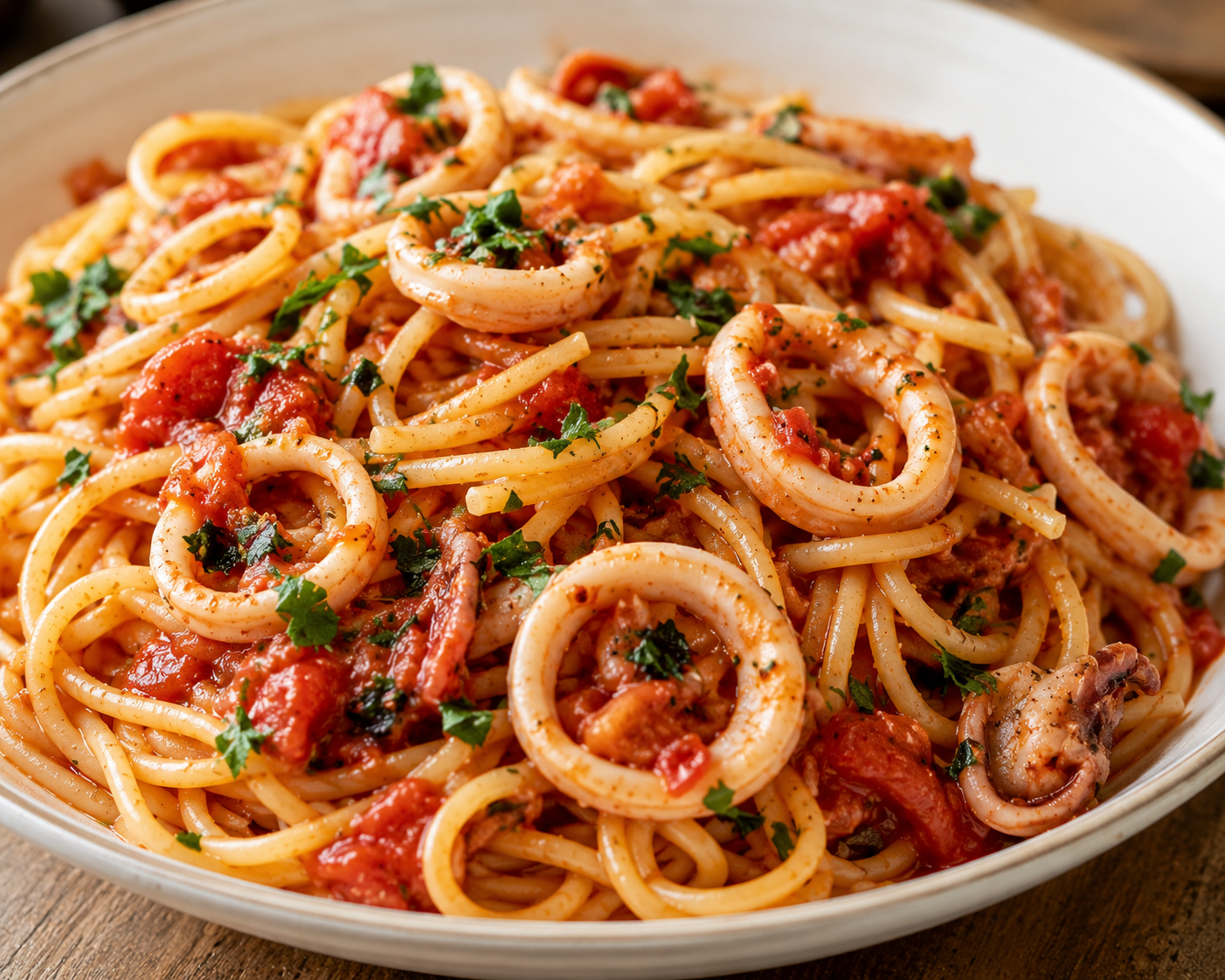
Greek Calamari Macaronatha is a beloved Mediterranean pasta dish that celebrates the simple, fresh ingredients found throughout the Greek islands. The name itself comes from two Greek words: “calamari,” referring to squid, and “macaronatha” meaning a pasta dish. Together, they describe a comforting meal that pairs tender calamari with pasta in a flavorful tomato-based sauce. It is infused with garlic, olive oil, herbs, and often a splash of dry white wine.
This traditional recipe has its roots in the Ionian Islands, particularly Corfu. where fresh seafood has long been a staple of local cuisine. Many historians believe the dish evolved during the centuries of Venetian influence over western Greece. Where Italian pasta-making traditions blended with Greek cooking techniques and abundant local seafood. The result was a uniquely Greek interpretation of seafood pasta that remains popular in tavernas and family kitchens today.
The beauty of Calamari Macaronatha lies in its simplicity. Fresh calamari is lightly sautéed before being gently simmered in a rich sauce. White wine adds depth and brightness, while a touch of lemon at the end enhances the natural sweetness of the seafood. Tossed with spaghetti, linguine, or bucatini, every strand of pasta becomes coated in the savory sauce.
Calamari Macaronatha Secret
One of the secrets to preparing exceptional calamari is understanding its cooking time. Squid should either be cooked very quickly, just one to two minutes, or slowly simmered until tender. Cooking it for an intermediate amount of time can make it rubbery, so experienced Greek cooks carefully monitor the process to achieve the perfect texture.
Calamari Macaronatha reflects the Mediterranean philosophy of cooking with fresh, seasonal ingredients. It does not depend on heavy sauces or excessive seasoning. High-quality extra virgin olive oil, ripe tomatoes, fragrant herbs, and freshly caught seafood work together to create layers of flavor. It does not overwhelm the delicate taste of the squid. While many modern variations include chili flakes, capers, olives, or grated Parmesan cheese, traditional recipes often remain remarkably uncomplicated, allowing each ingredient to shine.
Today, this dish continues to symbolize the relaxed coastal lifestyle of Greece. It is commonly served during family gatherings, seaside celebrations, and leisurely Sunday lunches overlooking the Aegean or Ionian Sea. Paired with crusty bread, a crisp Greek salad, and a chilled glass of Assyrtiko or other dry white wine, Calamari Macaronatha offers a memorable dining experience that captures the warmth, hospitality, and timeless culinary traditions of the Mediterranean. Whether prepared for a special occasion or a weeknight meal, this classic Greek seafood pasta brings the flavors of the Greek coast to the table with every delicious bite.

Calamari Macaronatha: A Classic Taste of the Greek Coast
Ingredients
Method
Step 1 – Prepare the Calamari
Pat the calamari dry with paper towels and season lightly with salt and pepper.Heat 2 tablespoons olive oil in a large skillet over medium-high heat.Sear the calamari for about 60–90 seconds, just until lightly browned. Remove immediately to a plate. Avoid overcooking, as squid becomes tough if cooked for too long.Step 2 – Build the Sauce
Reduce heat to medium.Add the remaining olive oil and sauté the onion until softened, about 5 minutes.Add the garlic and red pepper flakes and cook for another minute.Stir in the tomato paste and cook for 2 minutes.Pour in the white wine, scraping up any browned bits from the bottom of the pan. Simmer until reduced by half.- Add:Bring to a gentle simmer and cook for 20 minutes, stirring occasionally.crushed tomatoes, oregano, thyme, & sugar.
Step 3 – Cook the Pasta
Meanwhile, bring a large pot of salted water to a boil.Cook the pasta until al dente, according to package directions.Reserve 1 cup of the pasta cooking water before draining.Step 4 – Finish the Dish
Return the calamari and any accumulated juices to the tomato sauce.Simmer gently for 3–5 minutes, just until the squid is tender and fully cooked.Stir in parsley, basil, lemon zest, & lemon juice.Add the cooked pasta and toss until evenly coated.If needed, add a little reserved pasta water to loosen the sauce.Serve
Divide among warm pasta bowls.Top with: Fresh parsley, Additional basil, freshly grated Parmesan or Kefalotyri, a drizzle of extra virgin olive oil, & Lemon wedges on the sideServe immediately with warm crusty bread and a crisp Greek salad.
Notes
- Fresh calamari provides the best flavor and texture, but frozen (fully thawed) works very well.
- The secret to tender squid is either cook it very quickly (1–2 minutes) or slowly for 30–45 minutes. Avoid cooking it for 5–25 minutes, when it is most likely to become rubbery.
- A splash of ouzo added with the white wine gives the dish a subtle Greek flavor.
- Kalamata olives and capers make excellent additions for a briny Mediterranean twist.
- For extra richness, finish with a tablespoon of cold butter stirred into the sauce just before serving.
- Greek village salad (Horiatiki)
- Garlic bread or rustic sourdough
- Roasted asparagus or grilled zucchini
- A chilled Sauvignon Blanc, Assyrtiko, or Pinot Grigio